Screenshots
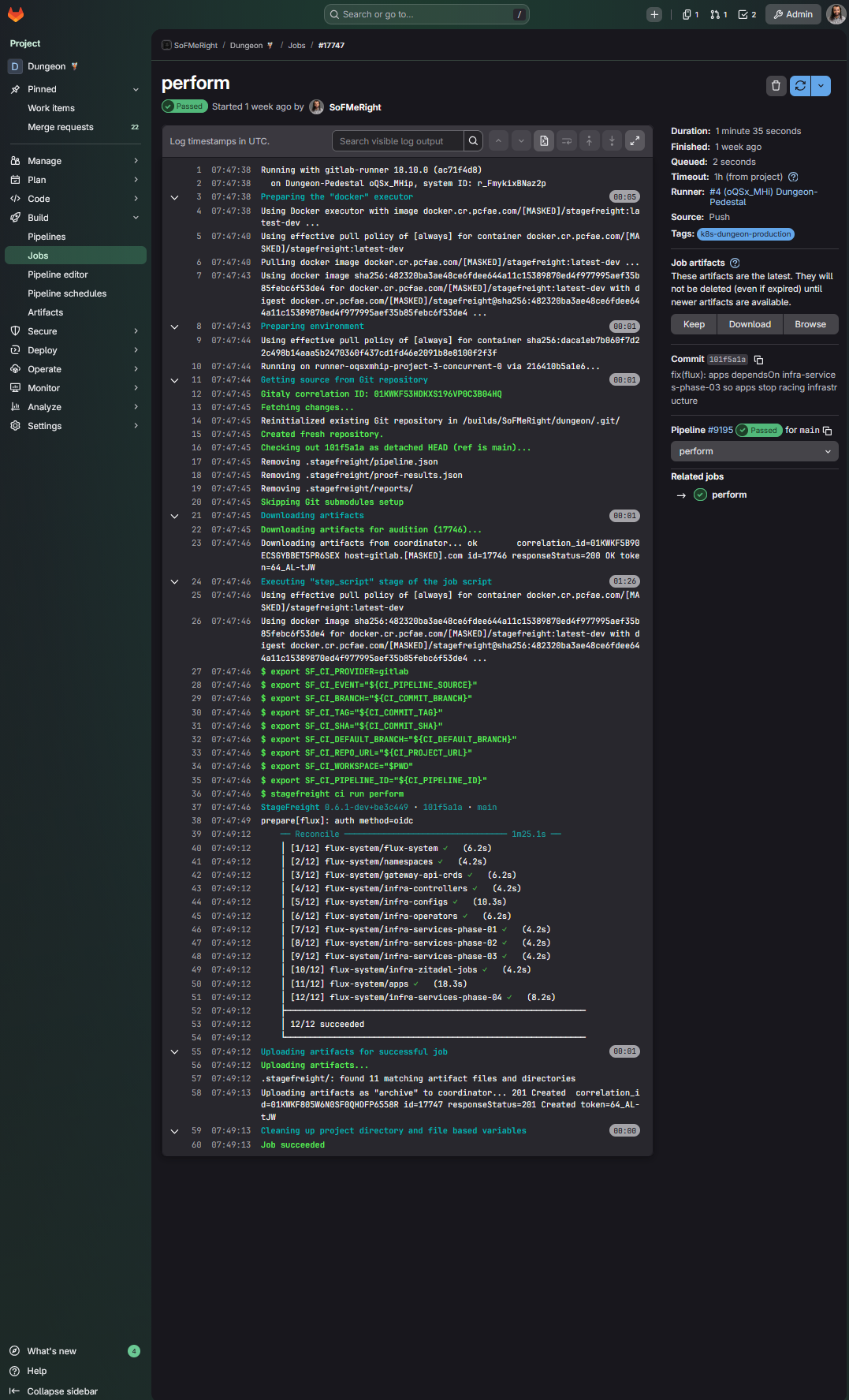
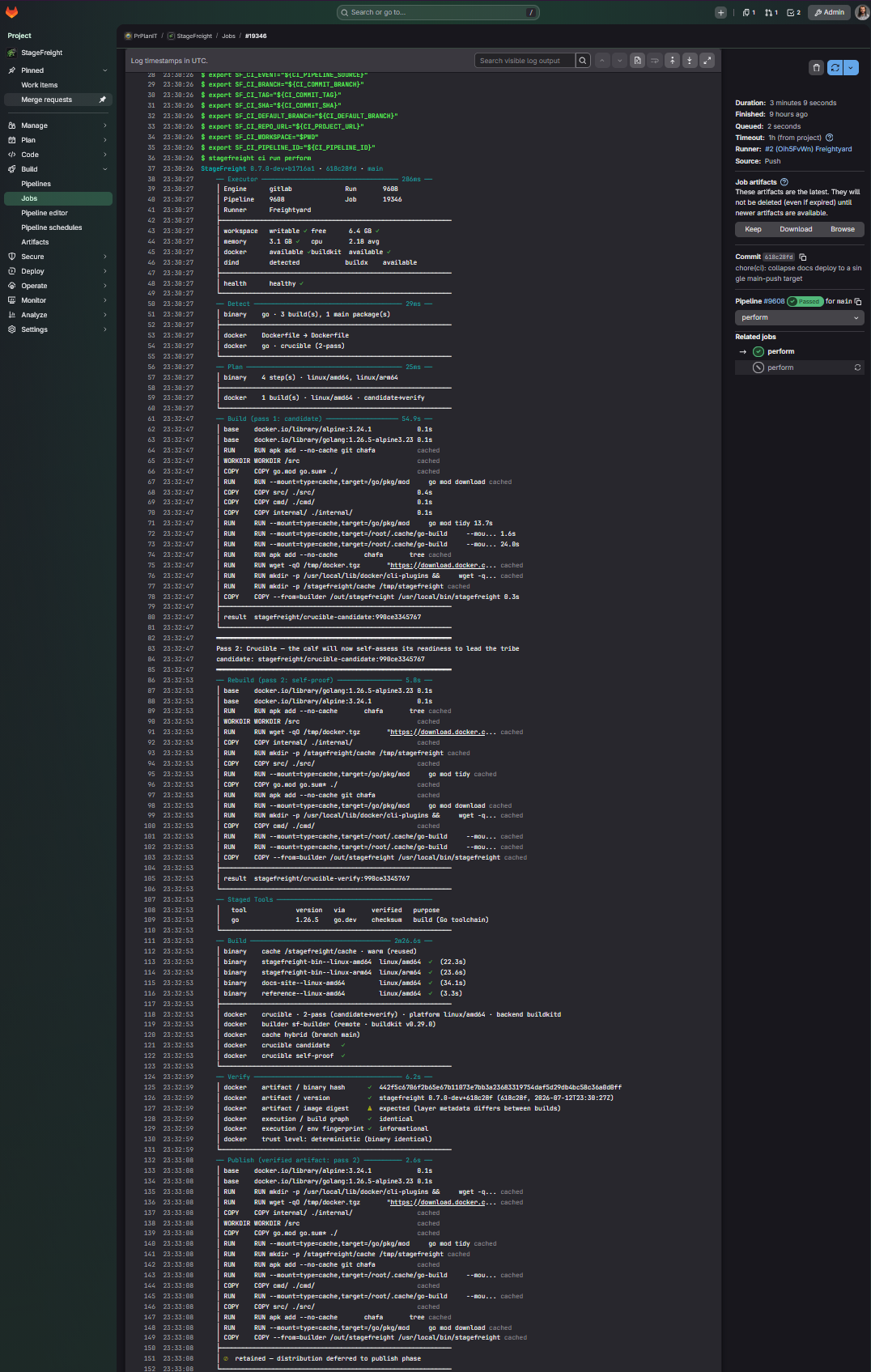
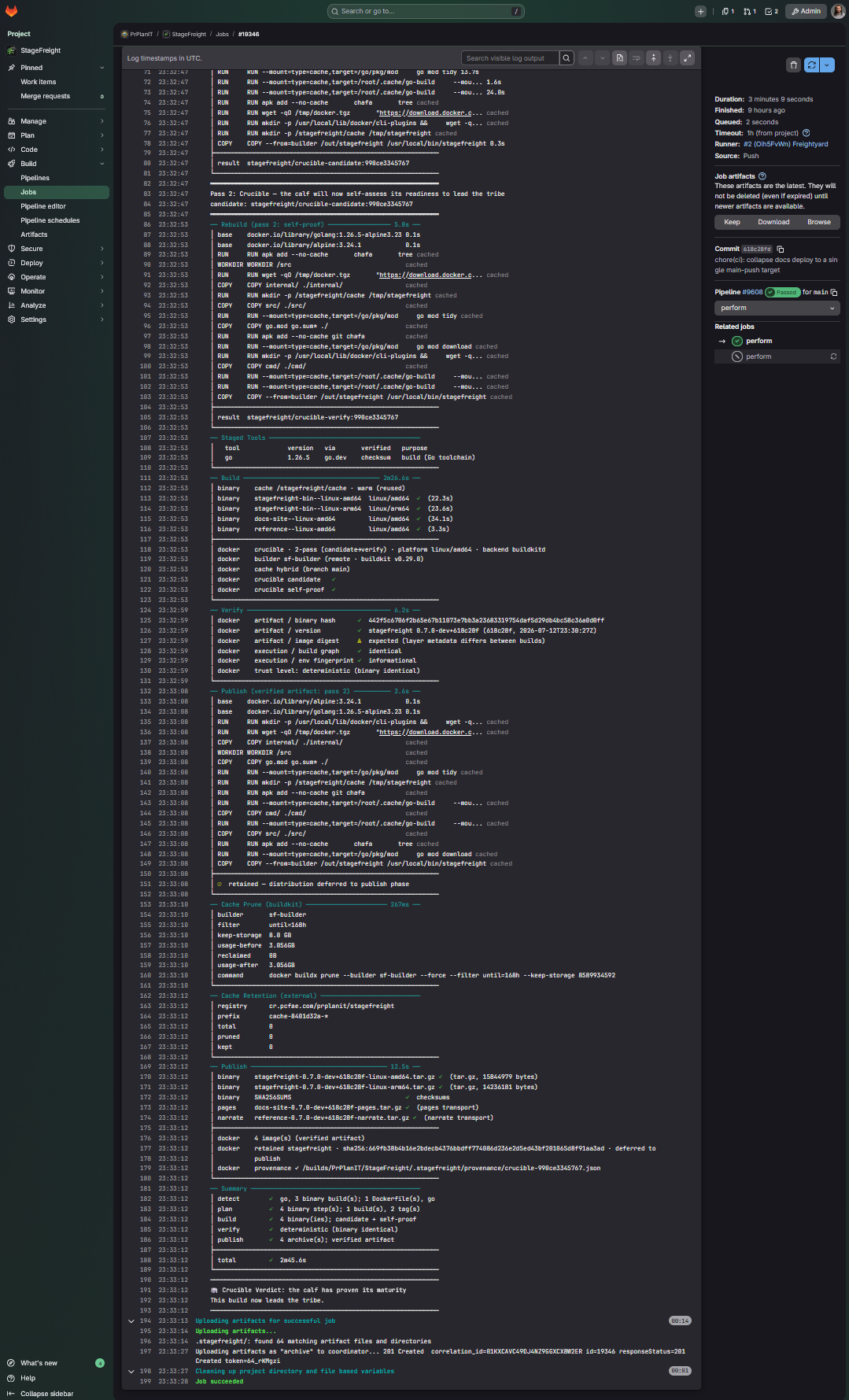
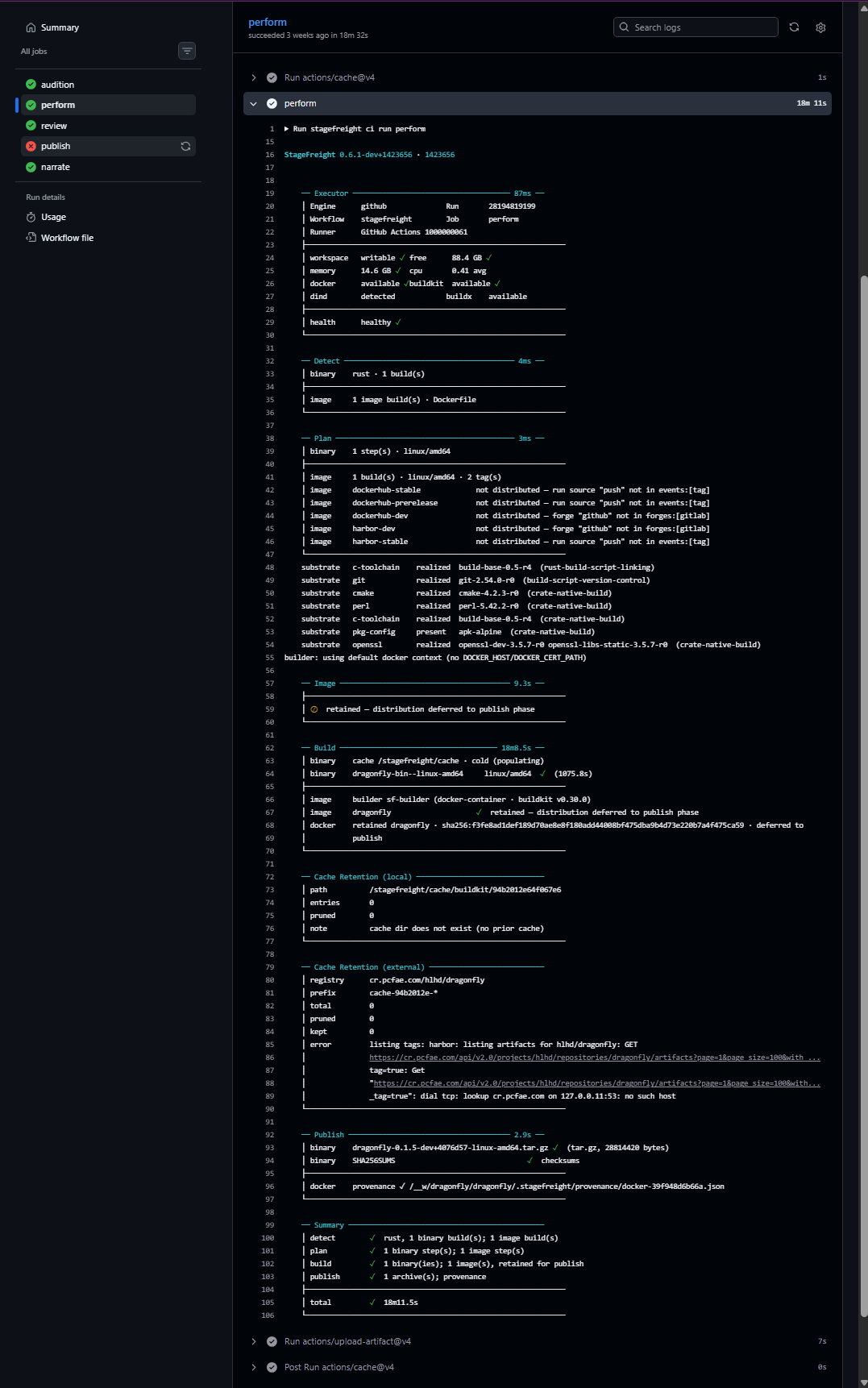
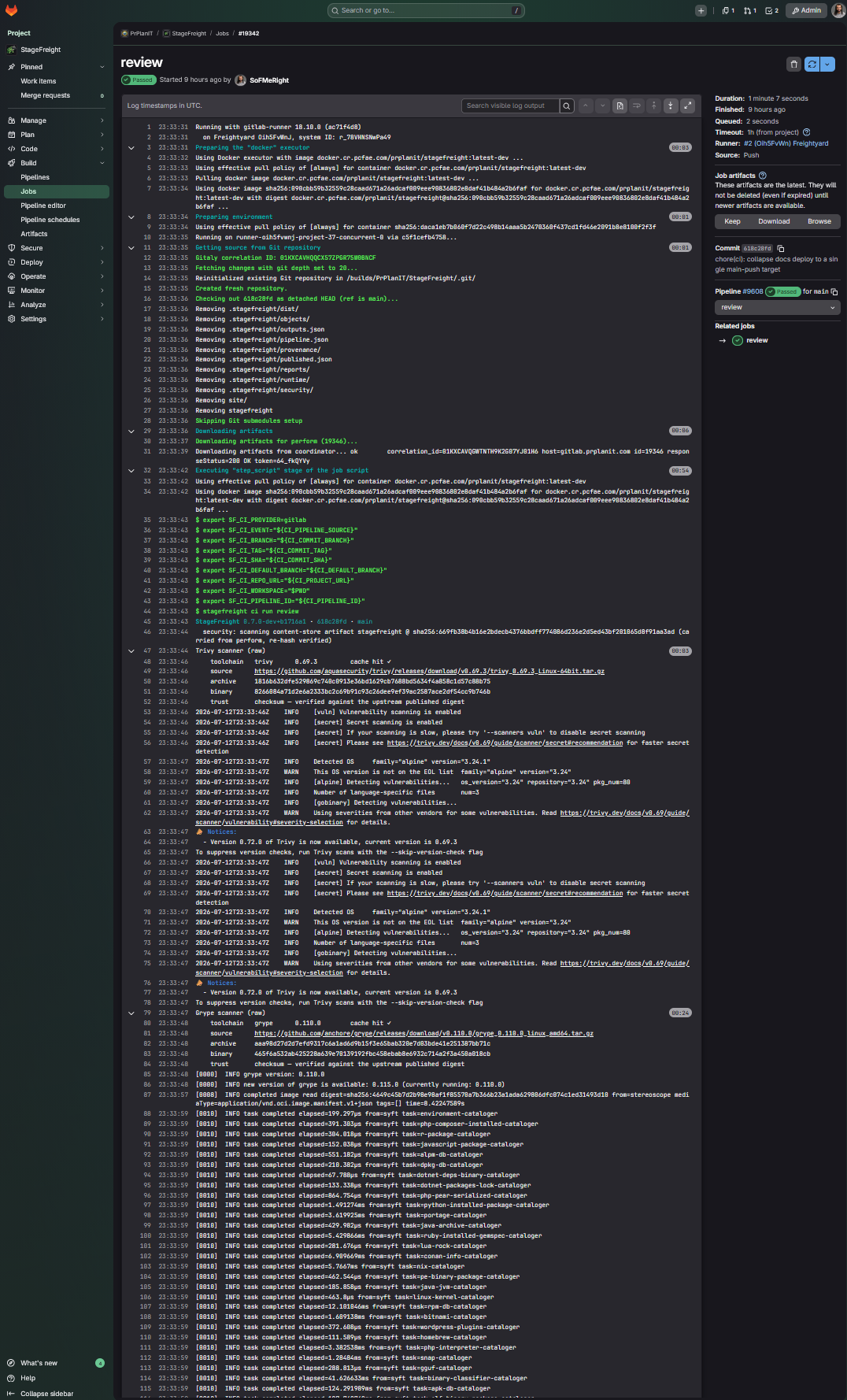
StageFreight dogfoods itself — everything on this site is built and shipped by StageFreight. The captures below are real pipelines: StageFreight building itself on GitLab CI, and StageFreight building a downstream project on GitHub Actions — the same tool and the same phases, rendered natively per forge — plus a GitOps run. This is what the structured, phase-by-phase output actually looks like.
The canonical pipeline
A run moves through five load-bearing phases — audition → perform → review → publish → narrate — the same graph regardless of forge:
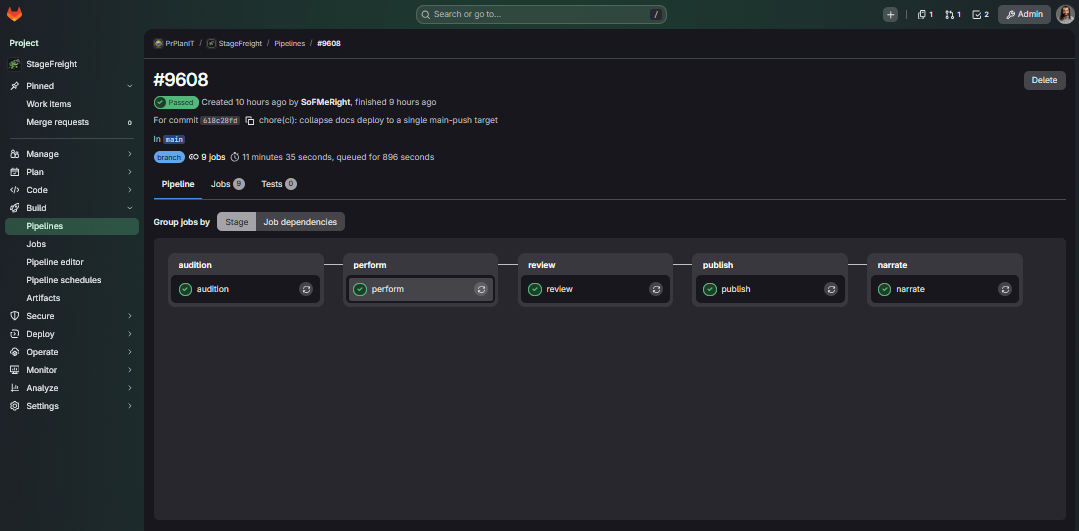
Build pipeline, phase by phase
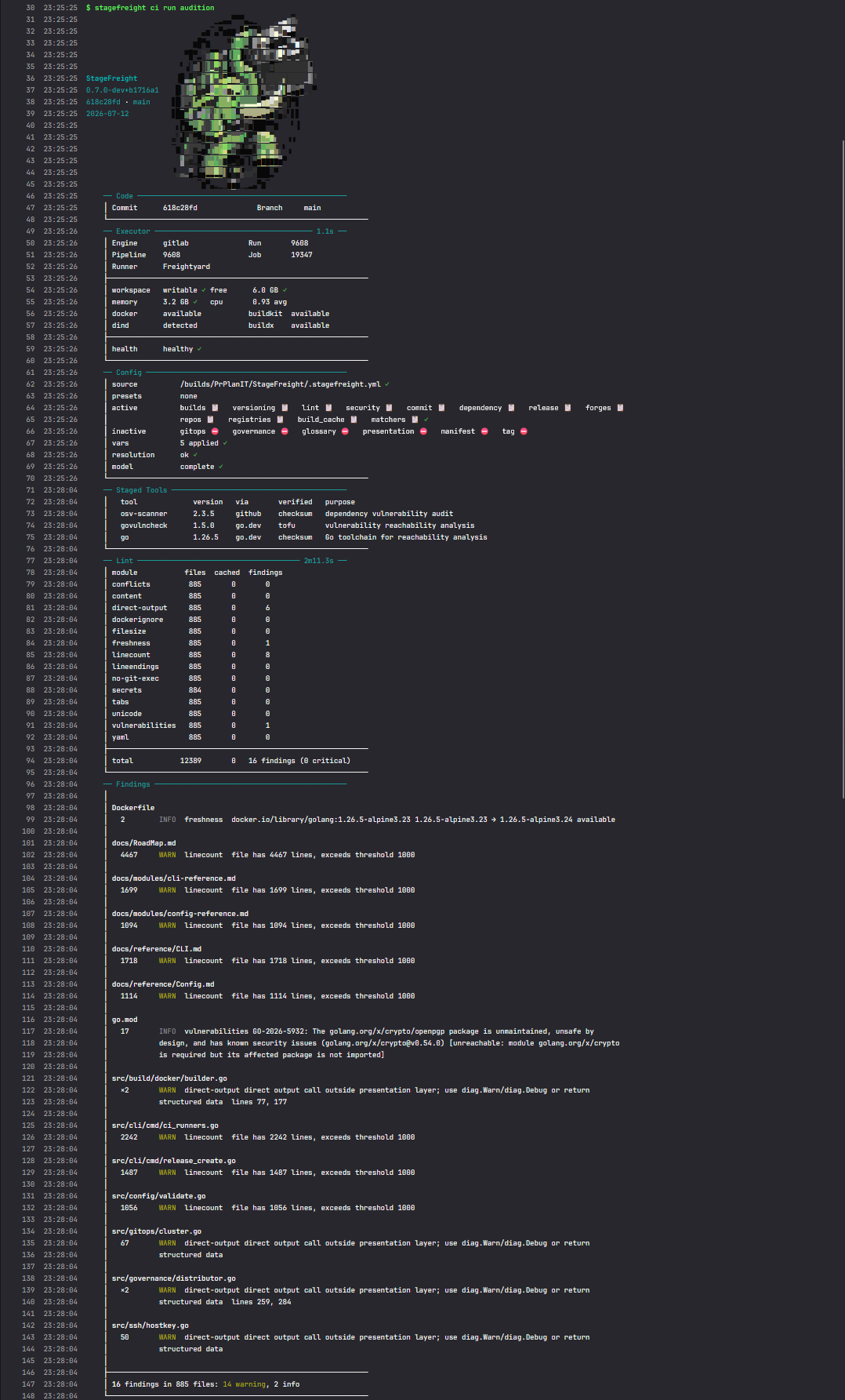
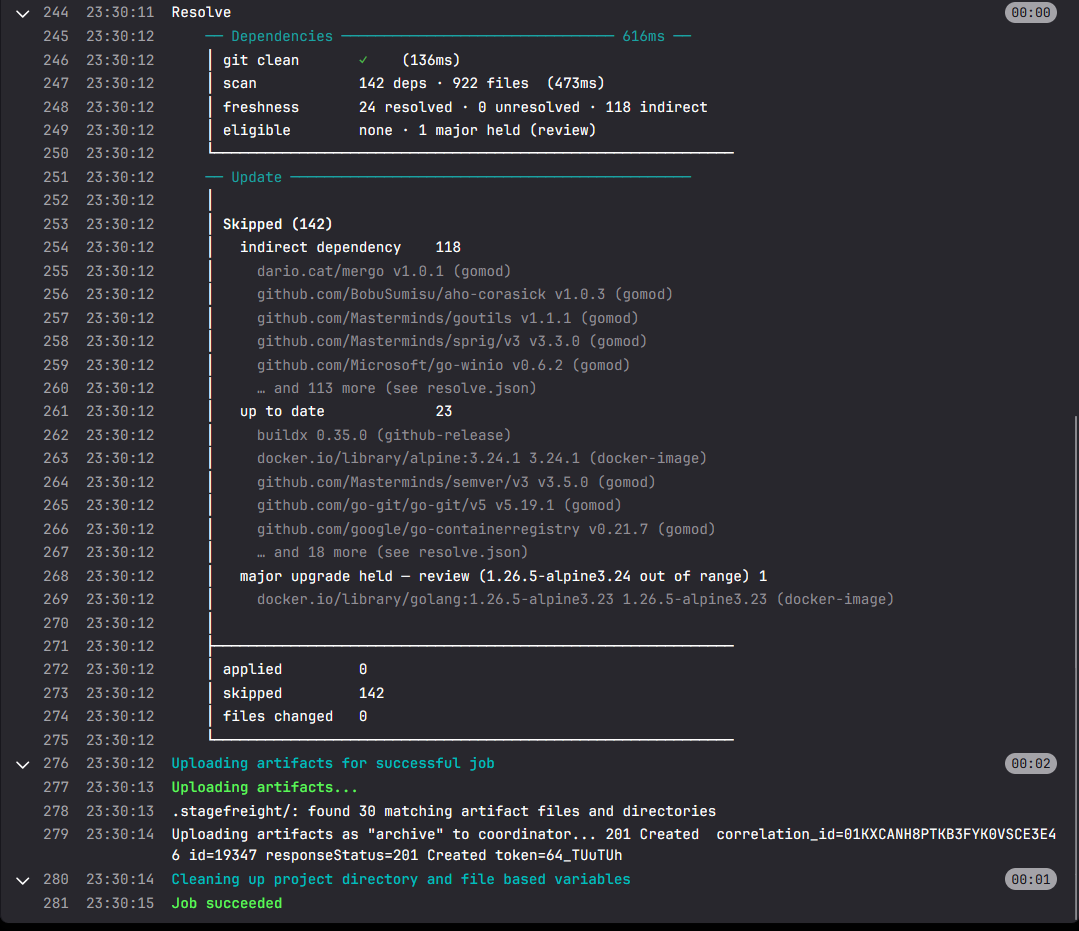
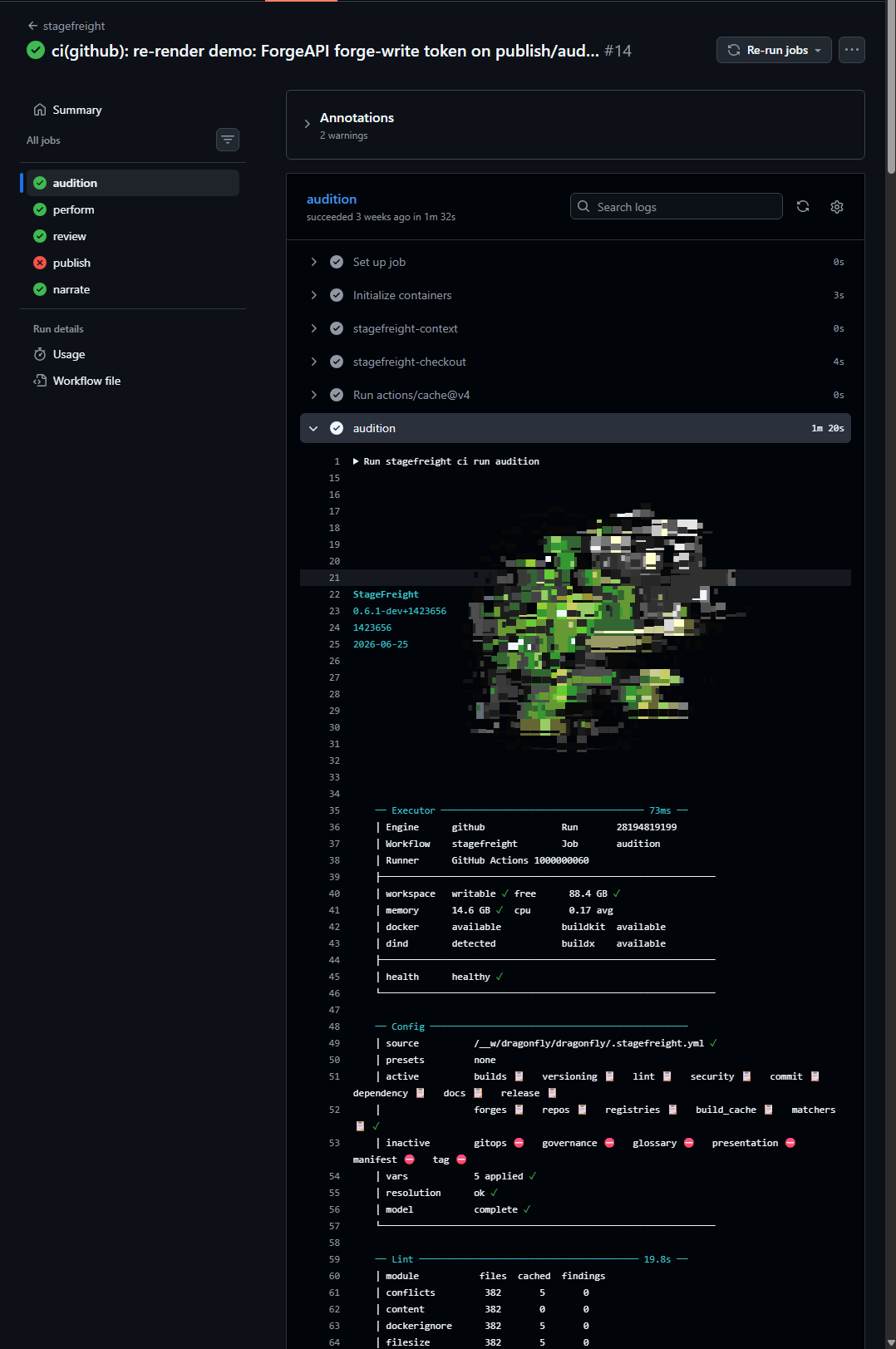
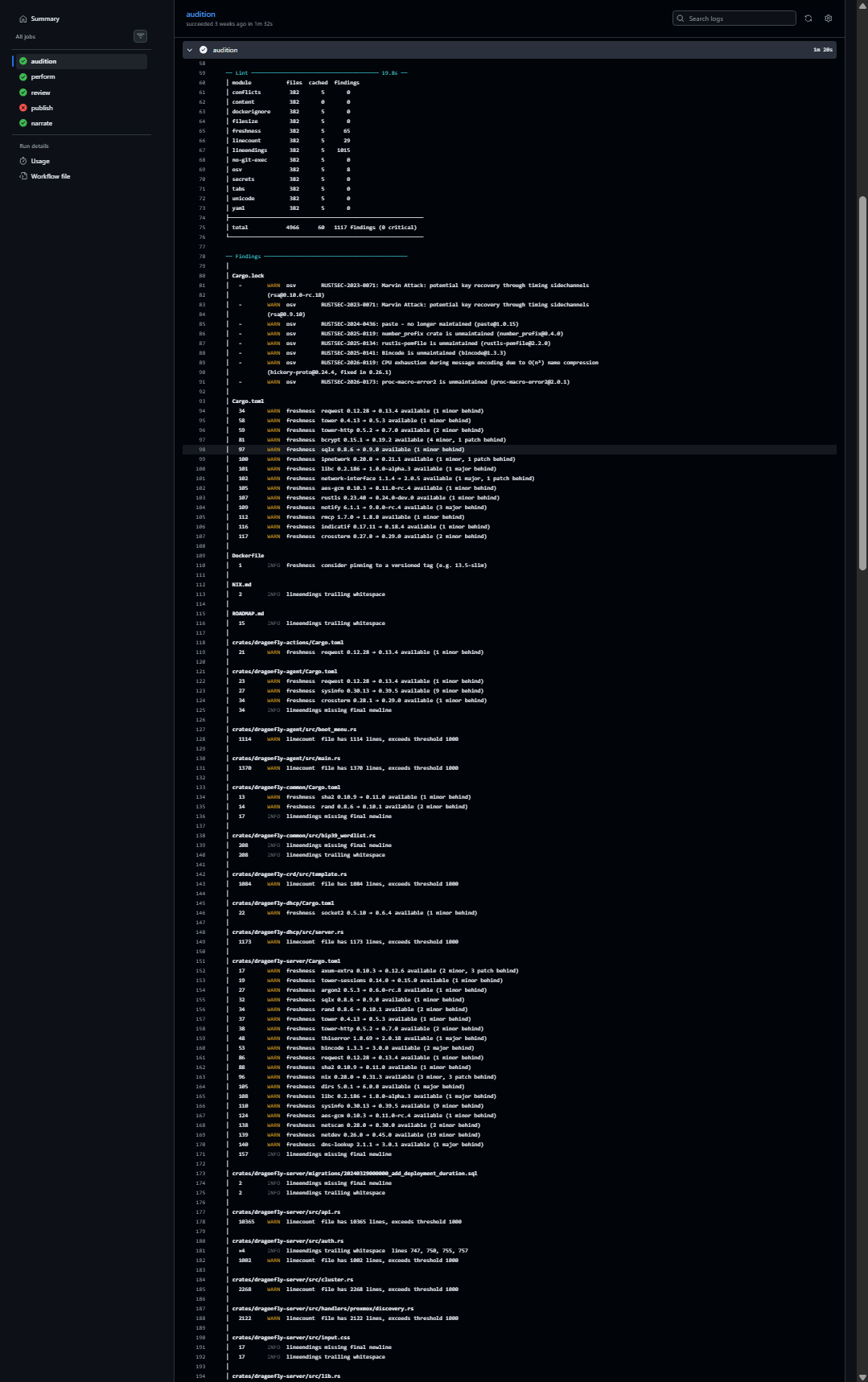
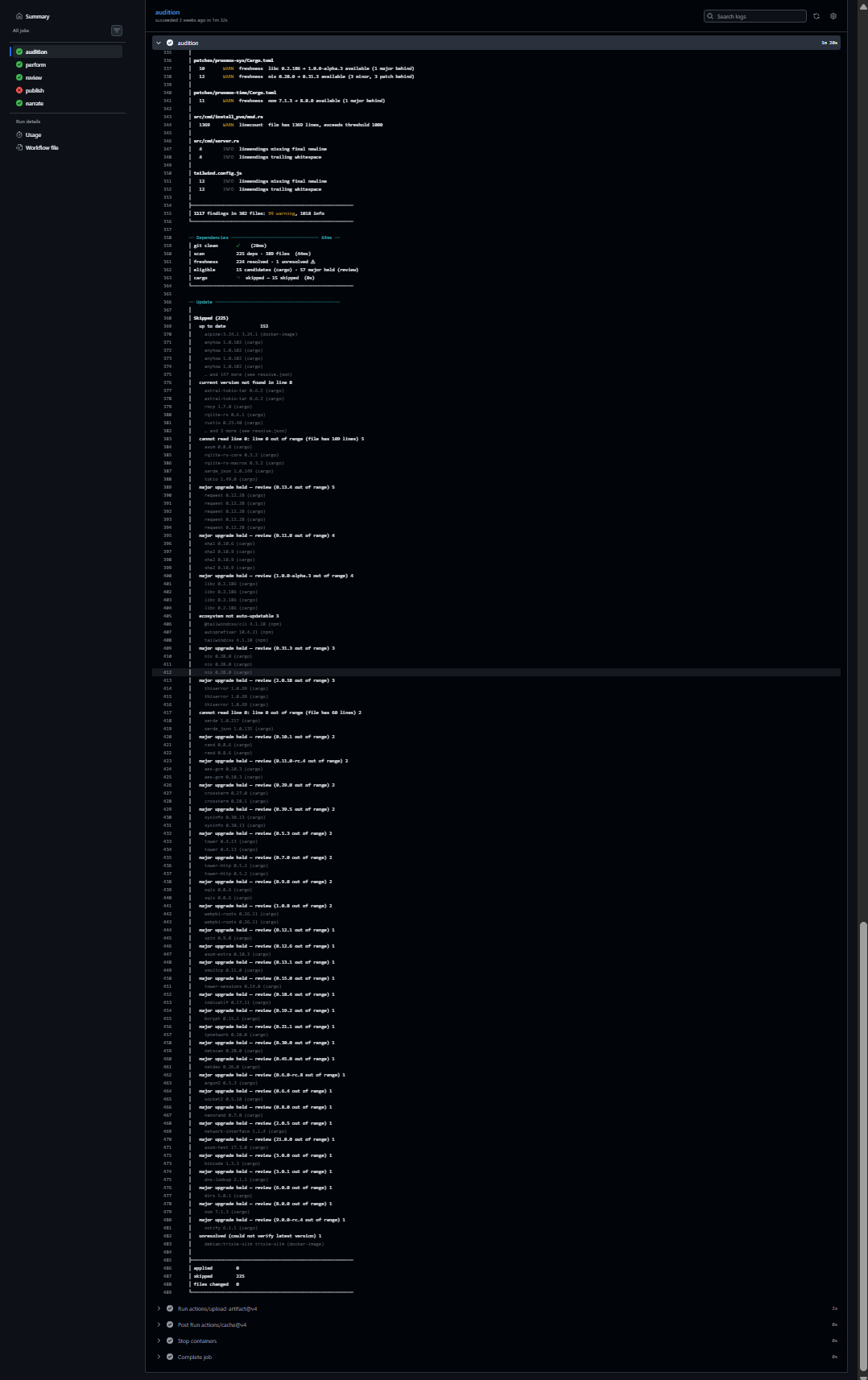
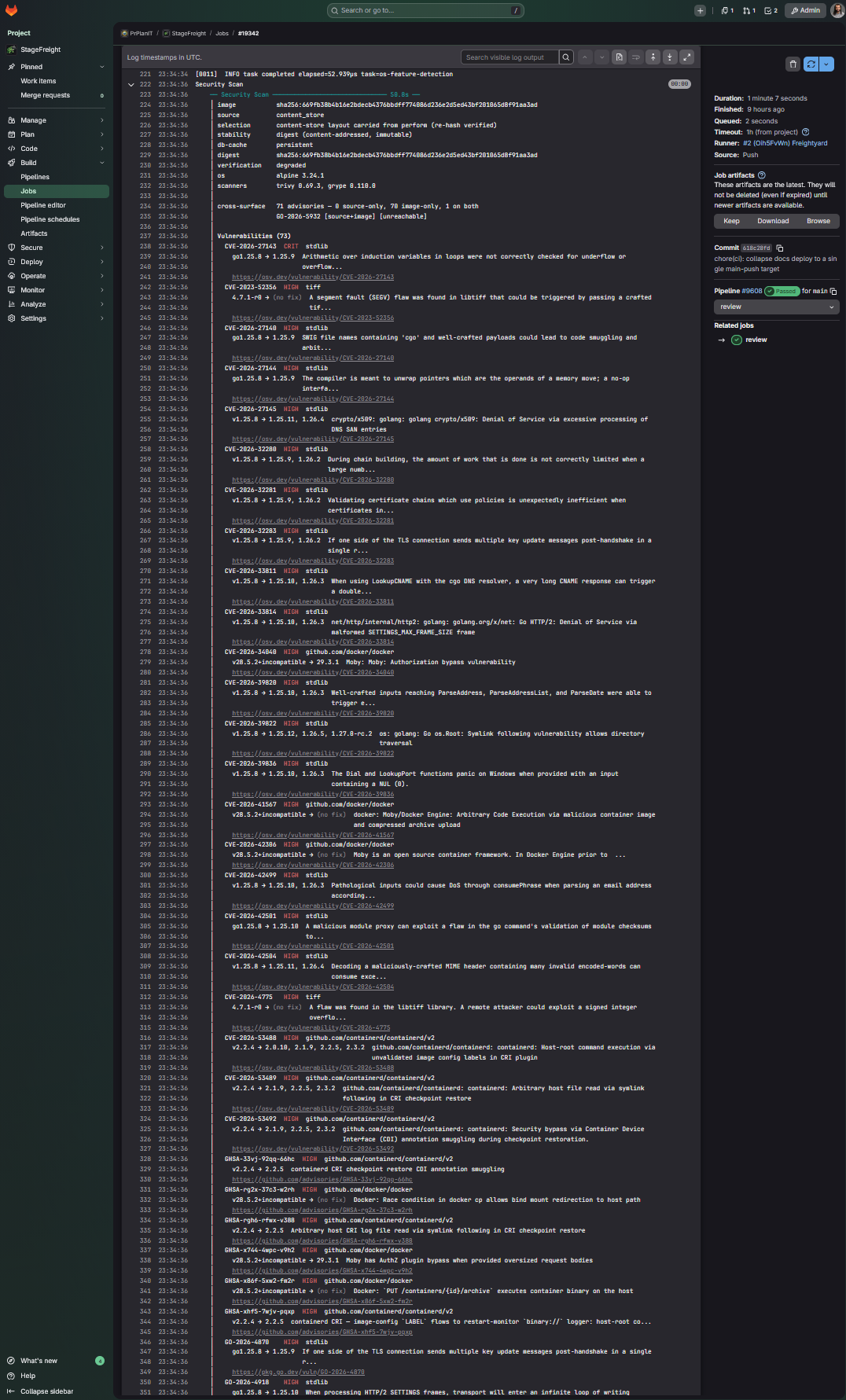
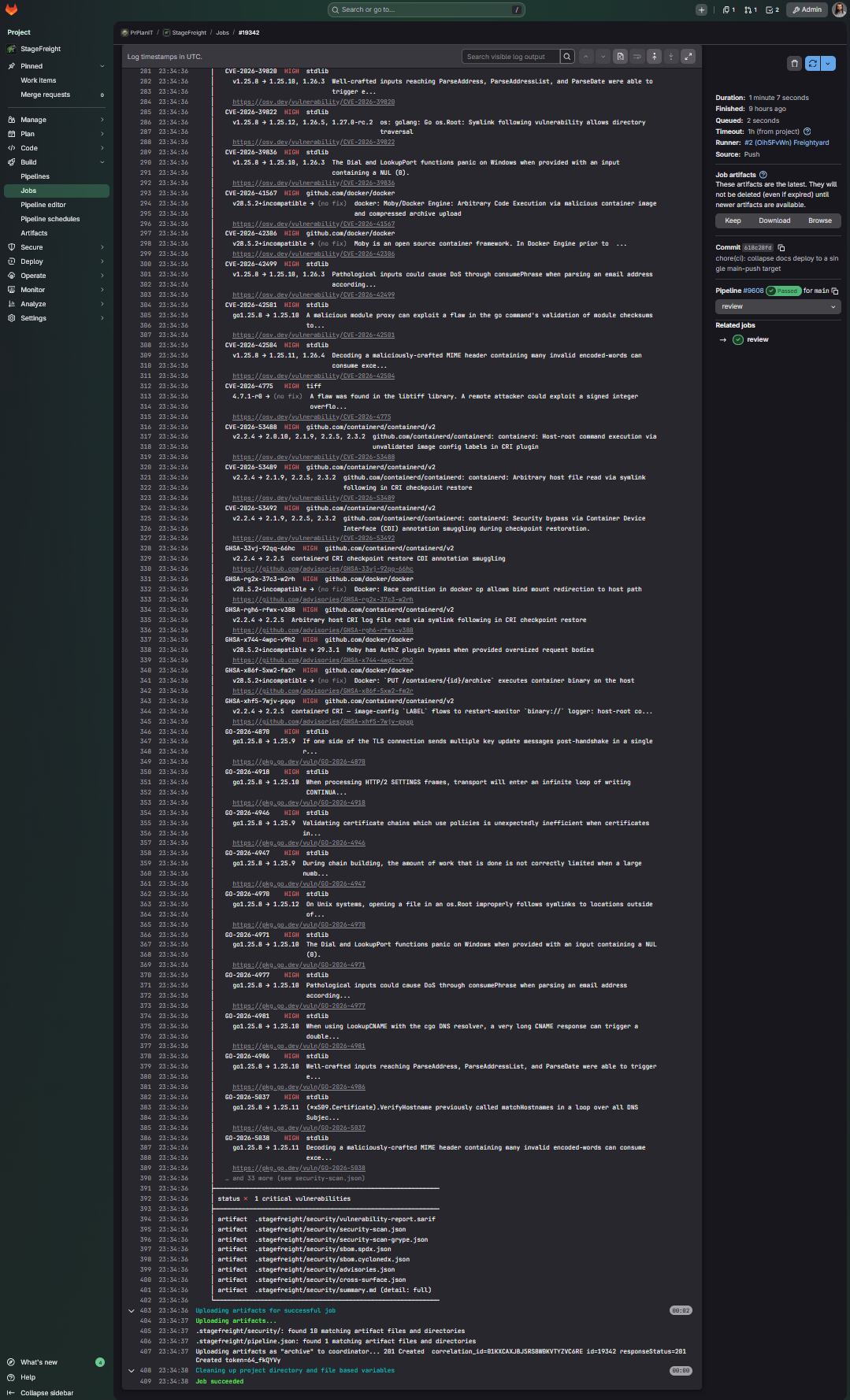
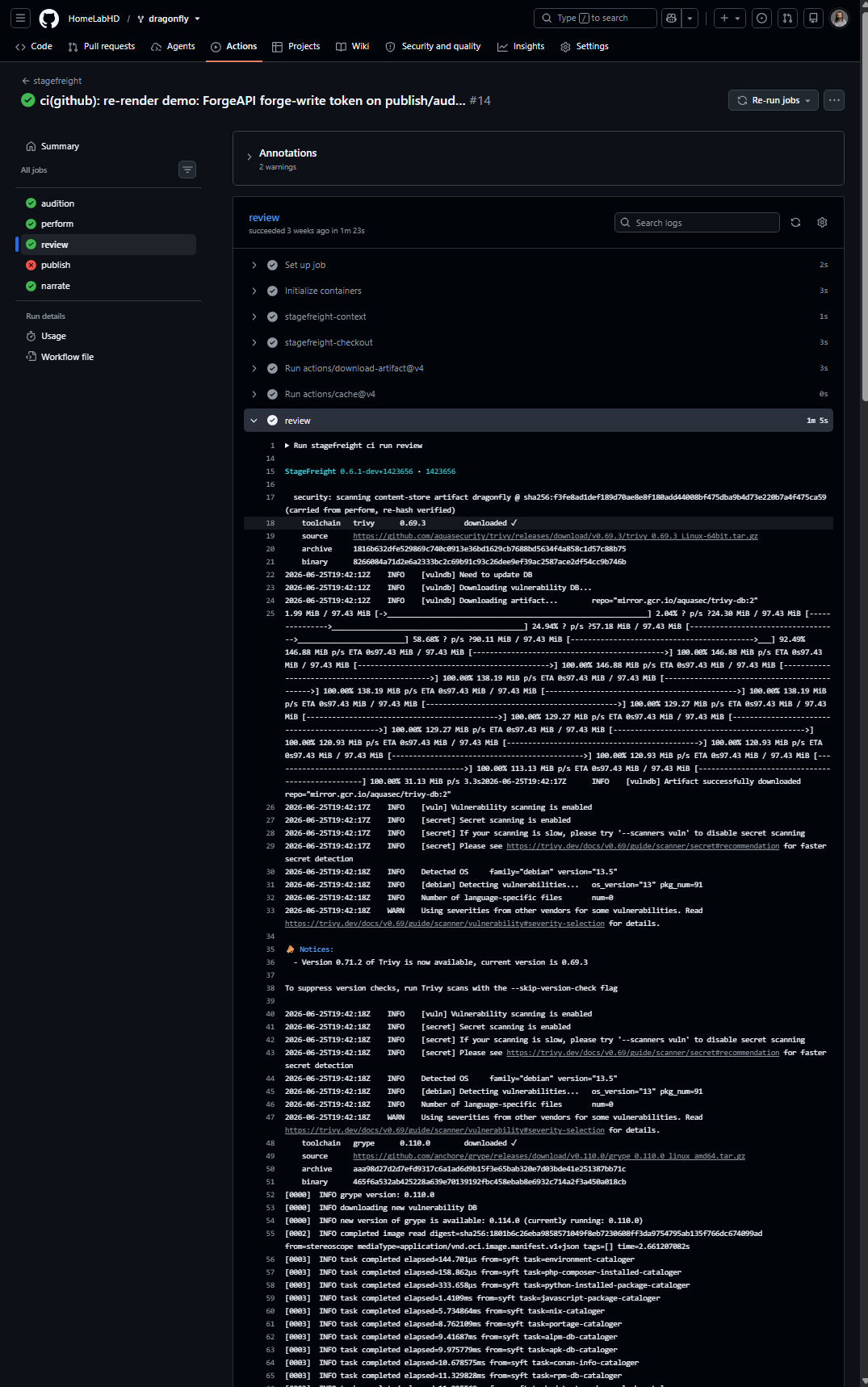
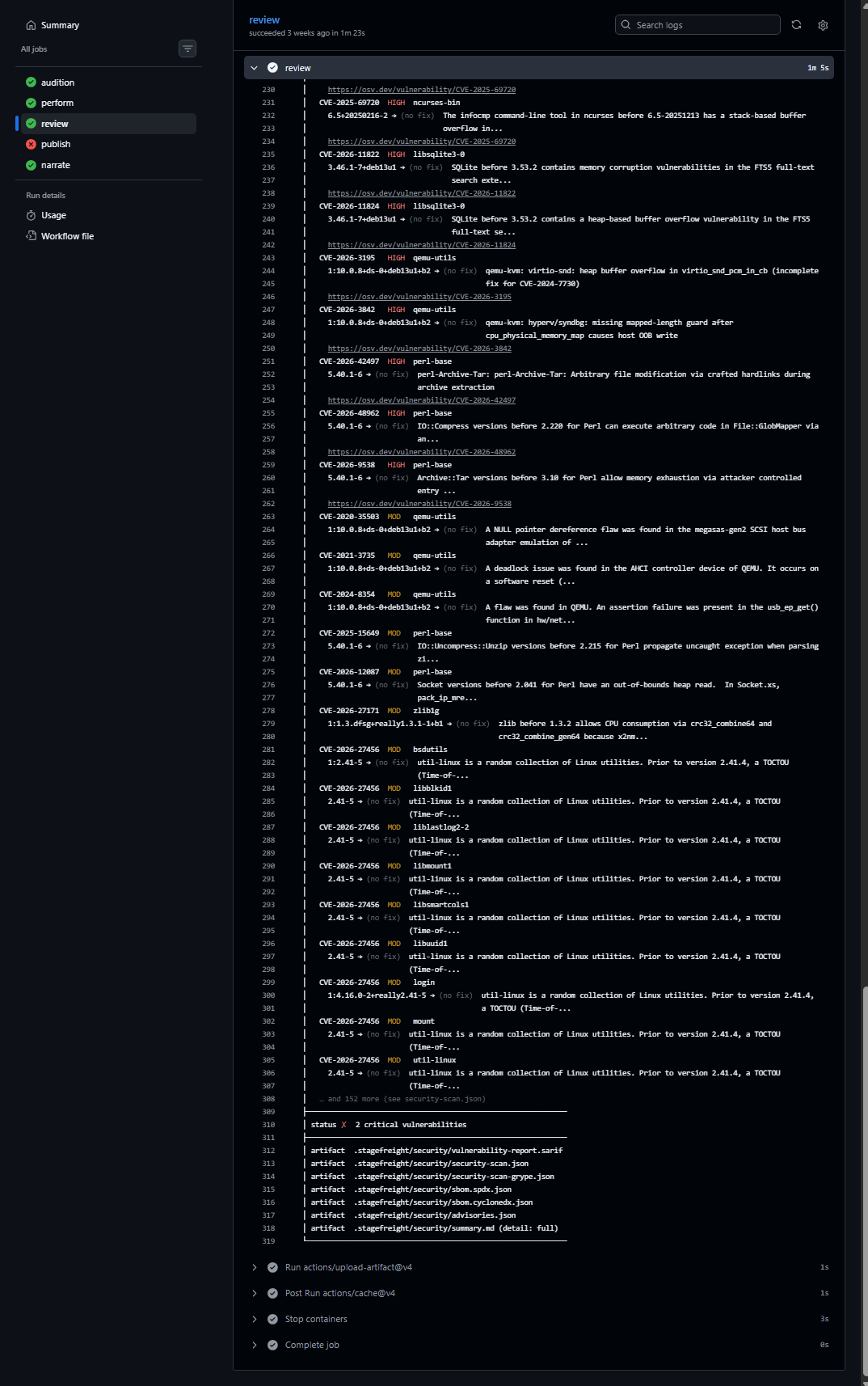
The five canonical phases, side by side: GitLab shows StageFreight building itself, GitHub shows it building a downstream project. Each phase renders the same structured panels regardless of forge or project — only the CI chrome and the repo differ. The numbered captures are consecutive segments of one (tall) job log.
1. Audition — lint, freshness, secret, and hygiene gates
The environment banner, Code/Executor/Config panels, staged toolchain, the lint matrix, and the findings gate.
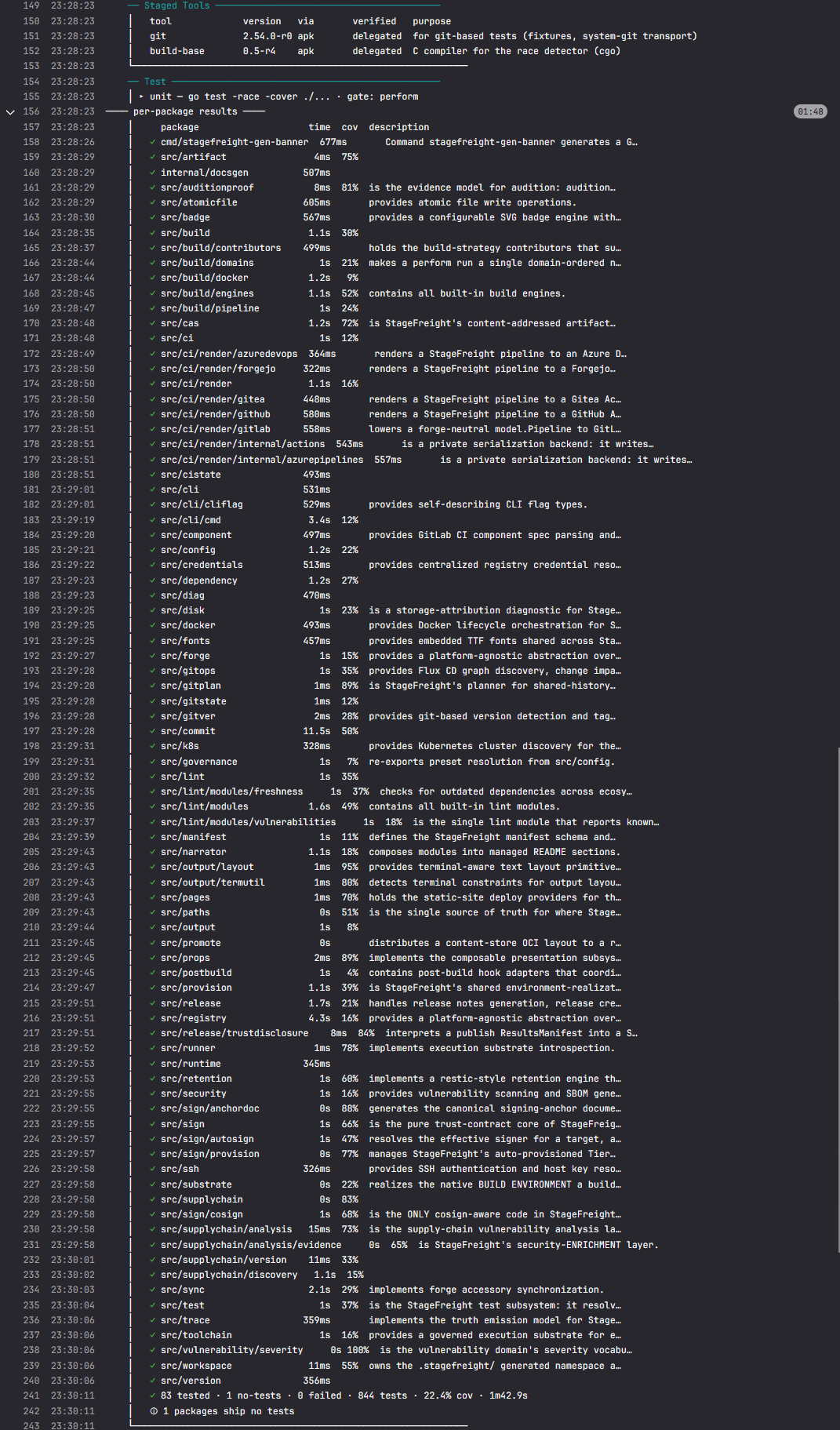
2. Perform — produce artifacts in containers
Detect → plan → build, with cache retention and the transport archives that carry artifacts into publish.
3. Review — inspect produced artifacts before publish
4. Publish — push images, cut releases, deploy, retain
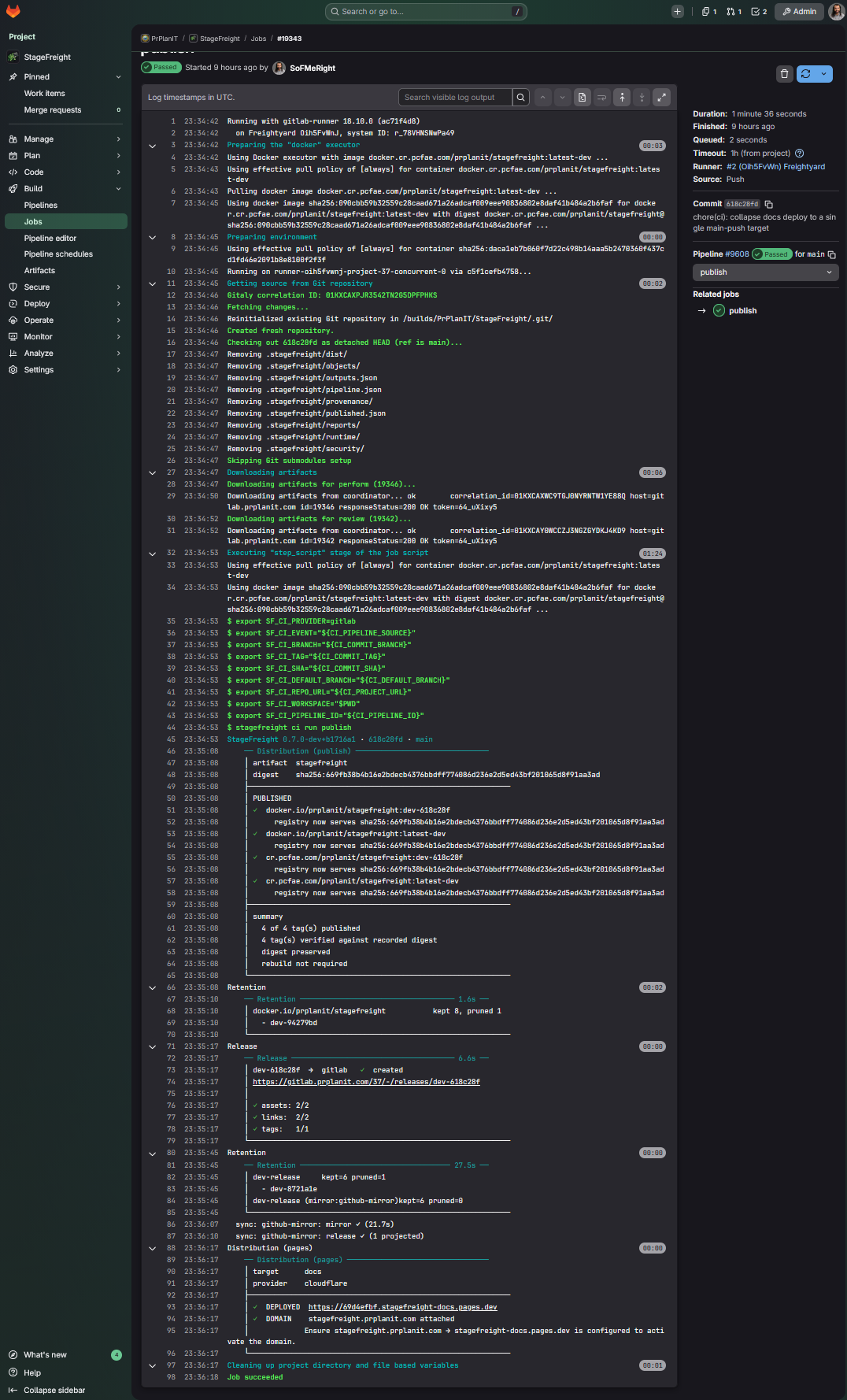
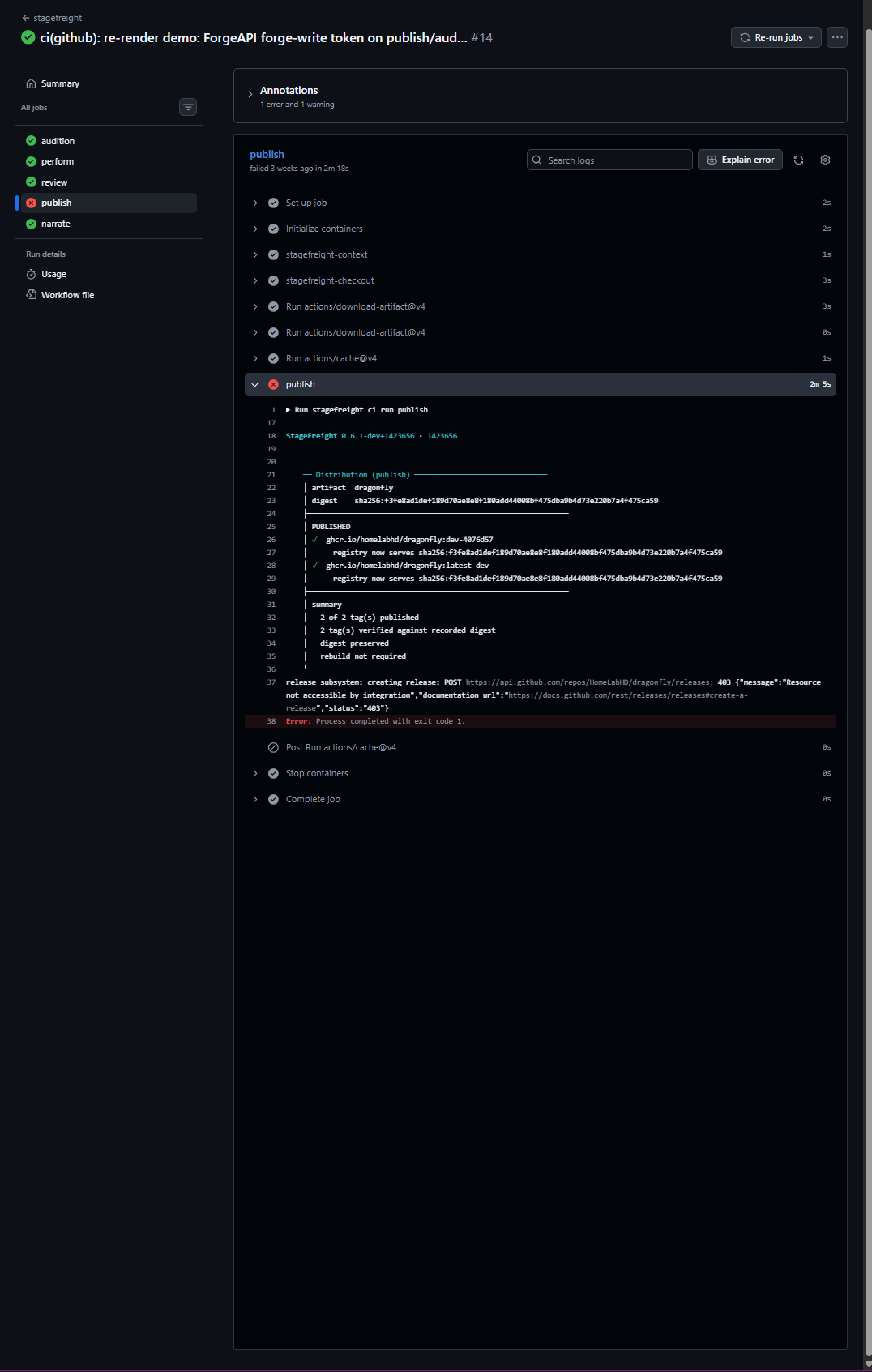
5. Narrate — compose repo-facing content and commit it
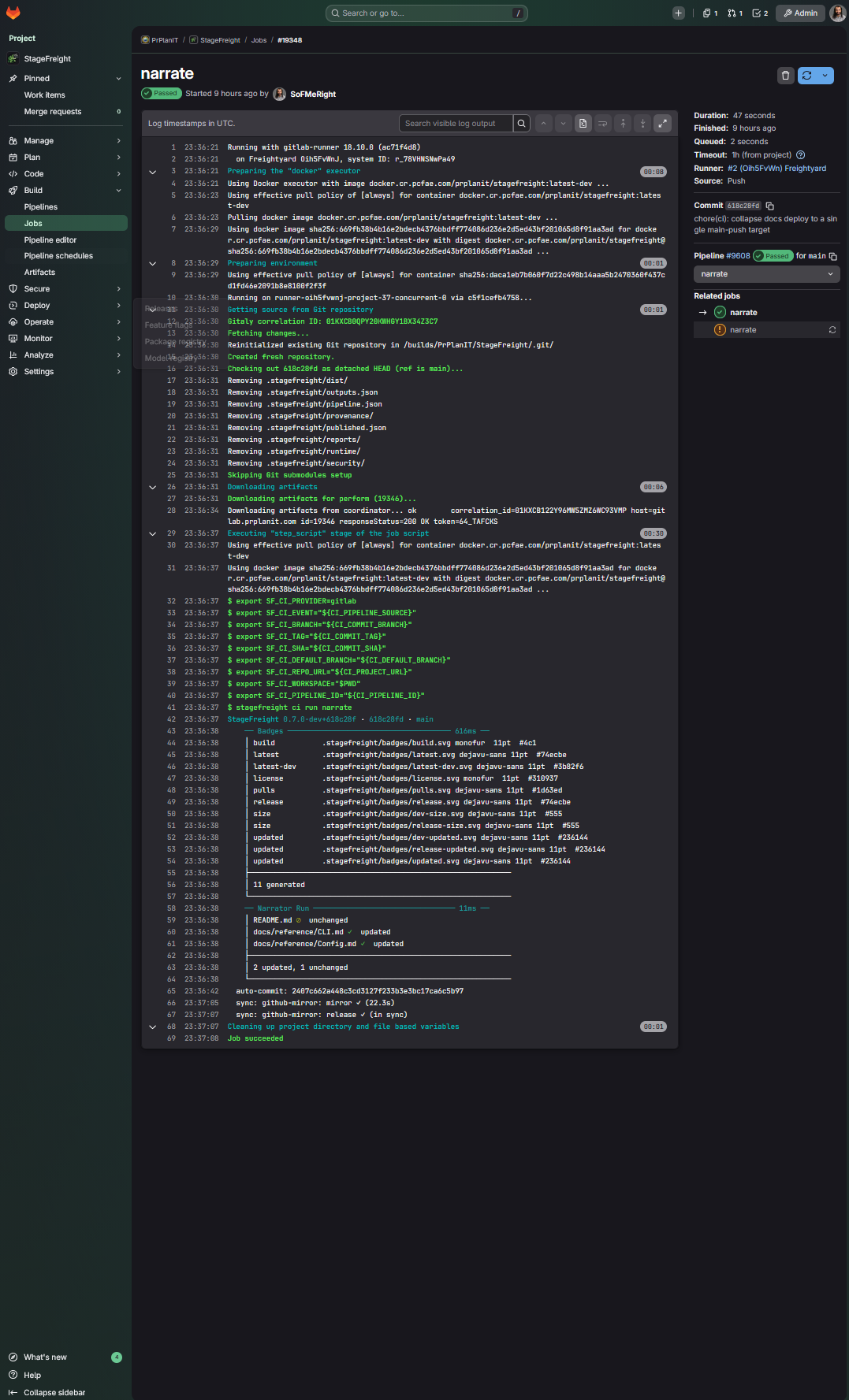
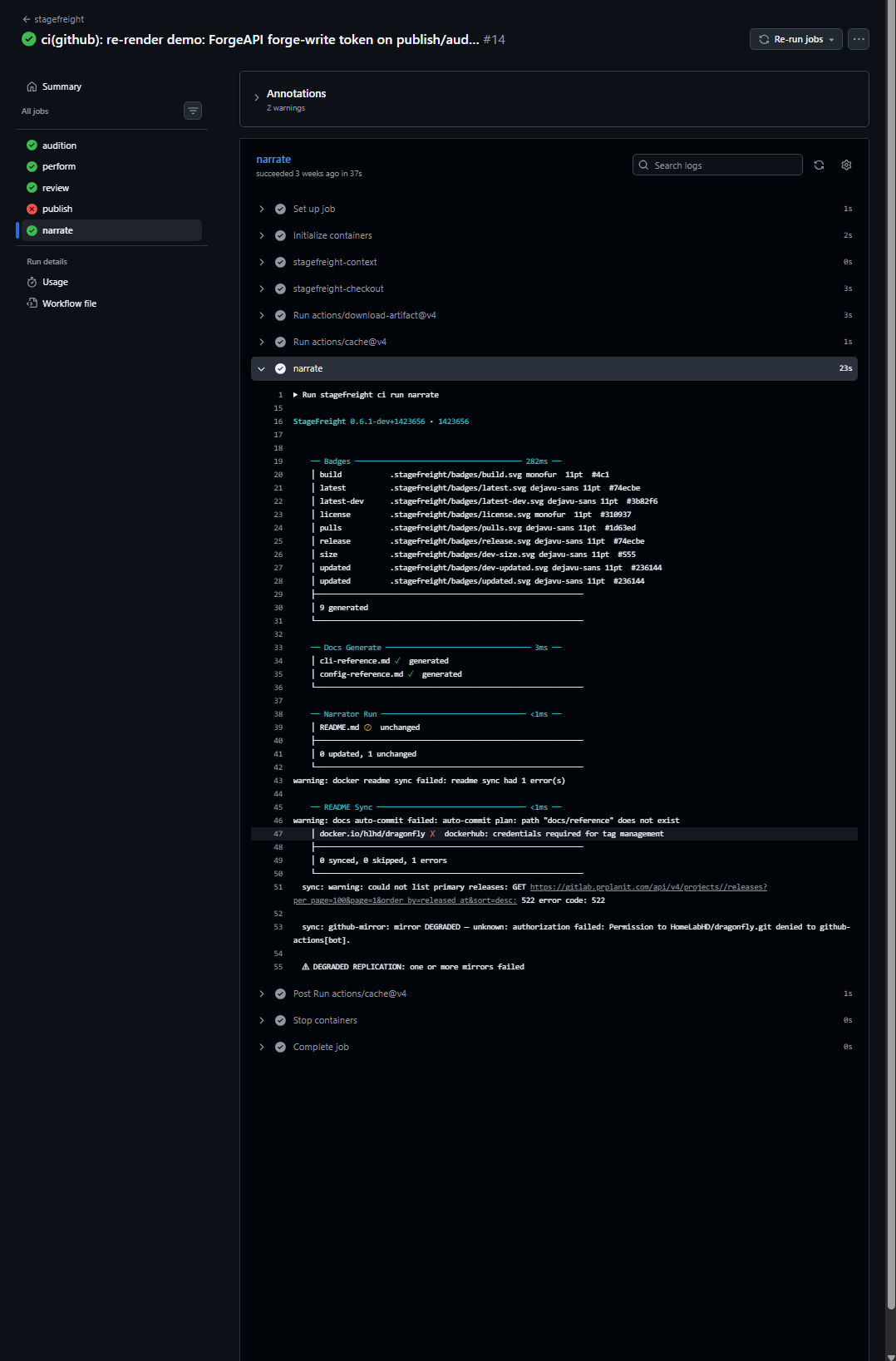
GitOps pipeline
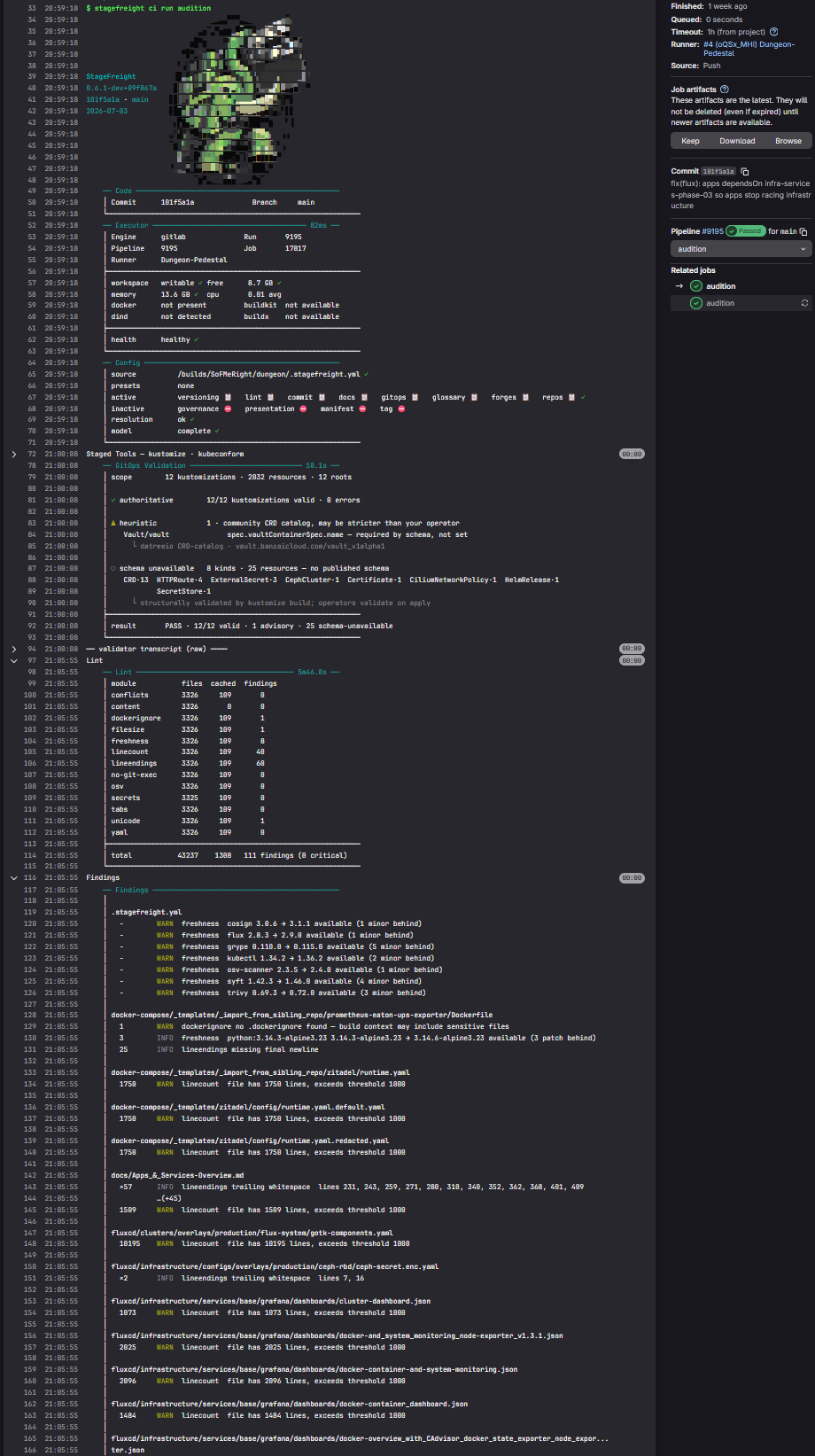
StageFreight also drives GitOps runs. Here the audition phase adds Kustomize/GitOps validation (schema and authority checks across the tree) before perform:
Audition — GitOps validation
Perform